Key Takeaways
- San Diego Microcement can install a polished-look, grout-free floor over many existing tile surfaces, which limits demolition.
- Sheen comes mainly from the sealer and topcoat, not from grinding the floor as with polished concrete.
- Matte or satin suits most living areas, kitchens, and wet zones.
- Gloss belongs in dry, well-lit rooms, and any wet area should be specified against a wet DCOF of 0.42 or higher.
Why Microcement Fits a Polished, Grout-Free Goal
Microcement is a thin layered coating, cited at roughly 2 to 3 mm excluding preparation (Topcret), so it can cover existing tile and remove visible grout lines without a full tear-out. Results still depend on the surface beneath, which is why substrate preparation matters more than the finish itself.
Choosing a Sheen Level for Each Room
Polished microcement refers to the final sheen of the surface, not to mechanical grinding. Finish lines such as Topciment’s list matte, super matte, satin, gloss, and non-slip matte.
| Sheen | Best suited to | Trade-off |
|---|---|---|
| Matte | Showers, bathrooms, entries | Softer light reflection |
| Satin | Living areas, kitchens | Shows some scuffs under raking light |
| Gloss | Dry, well-lit rooms | Highlights water spots and fingerprints |
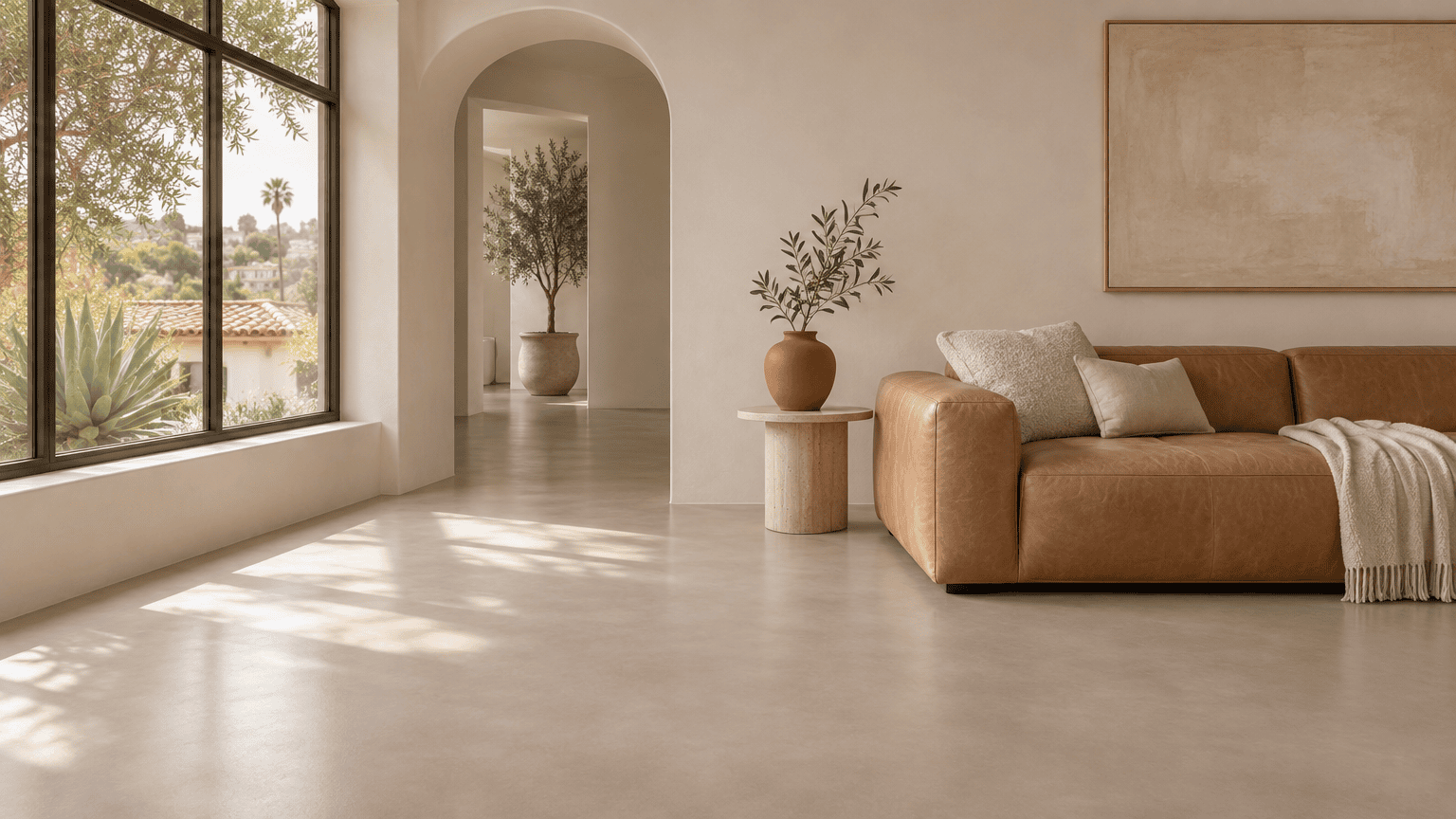
For a microcement living room floor, satin is a dependable choice. It reads as modern and refined while hiding everyday wear better than gloss. Keep sheen consistent between adjoining rooms, since a change at a doorway breaks the continuous look.
How the Polished Look Is Created
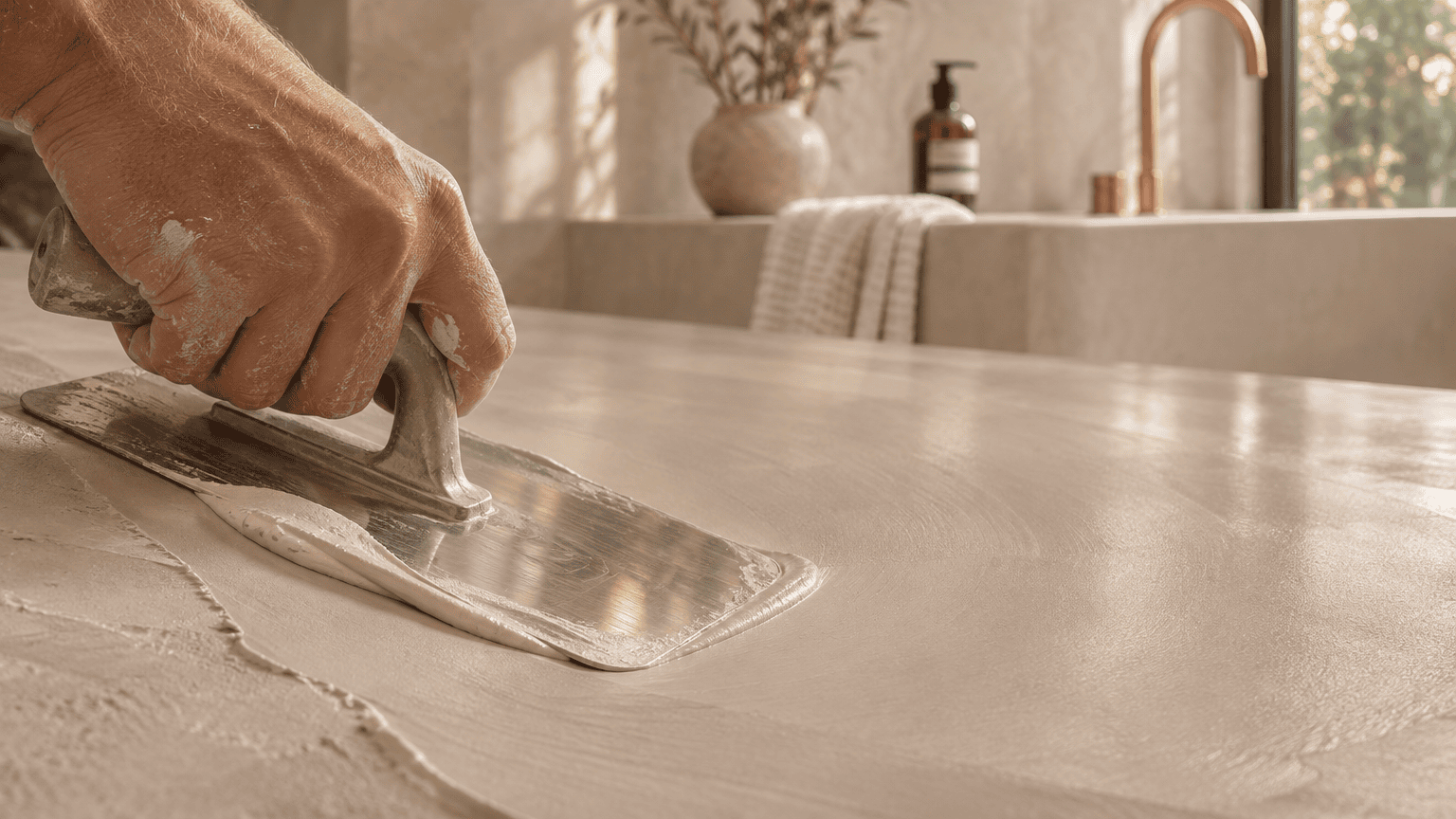
Polished concrete is ground and honed mechanically (Forcrete, April 2025). Microcement is troweled and burnished as it sets, lightly sanded between coats, and then sealed. The sealer determines final sheen, stain resistance, and water resistance. Installer technique controls uniformity, because trowel marks and micro-ridges show more as the finish gets glossier.
Slip Resistance Depends on Texture and Sheen
Glossier surfaces can feel slicker when wet unless the topcoat adds texture. ANSI A137.1 sets a minimum wet Dynamic Coefficient of Friction (DCOF) of 0.42 for hard surfaces in level interior spaces expected to be walked on when wet (Daltile; Sherwin-Williams). The standard was written for tile, but it is a useful reference for microcement in bathrooms. Forcrete also notes that finish selection affects slip resistance, light reflection, and performance.
Cleaning products and worn sealer can change traction over time, so maintenance matters.
What to Confirm Before Approving a Finish
Which sealer and sheen will be used, and is it consistent in every room?
Does the wet-area topcoat include an anti-slip additive?
Can you review a sample under your own lighting, and test it wet?
Has the existing tile, including grout and any expansion joints, been evaluated as a substrate?
A sample on your actual tile shows more than a catalog photo. Reviewing completed work in the project gallery helps you compare matte, satin, and gloss in real rooms. If you are weighing options, the microcement vs. tile comparison covers timeline and maintenance differences.