The Hidden Foundation: What Lies Beneath Microcement
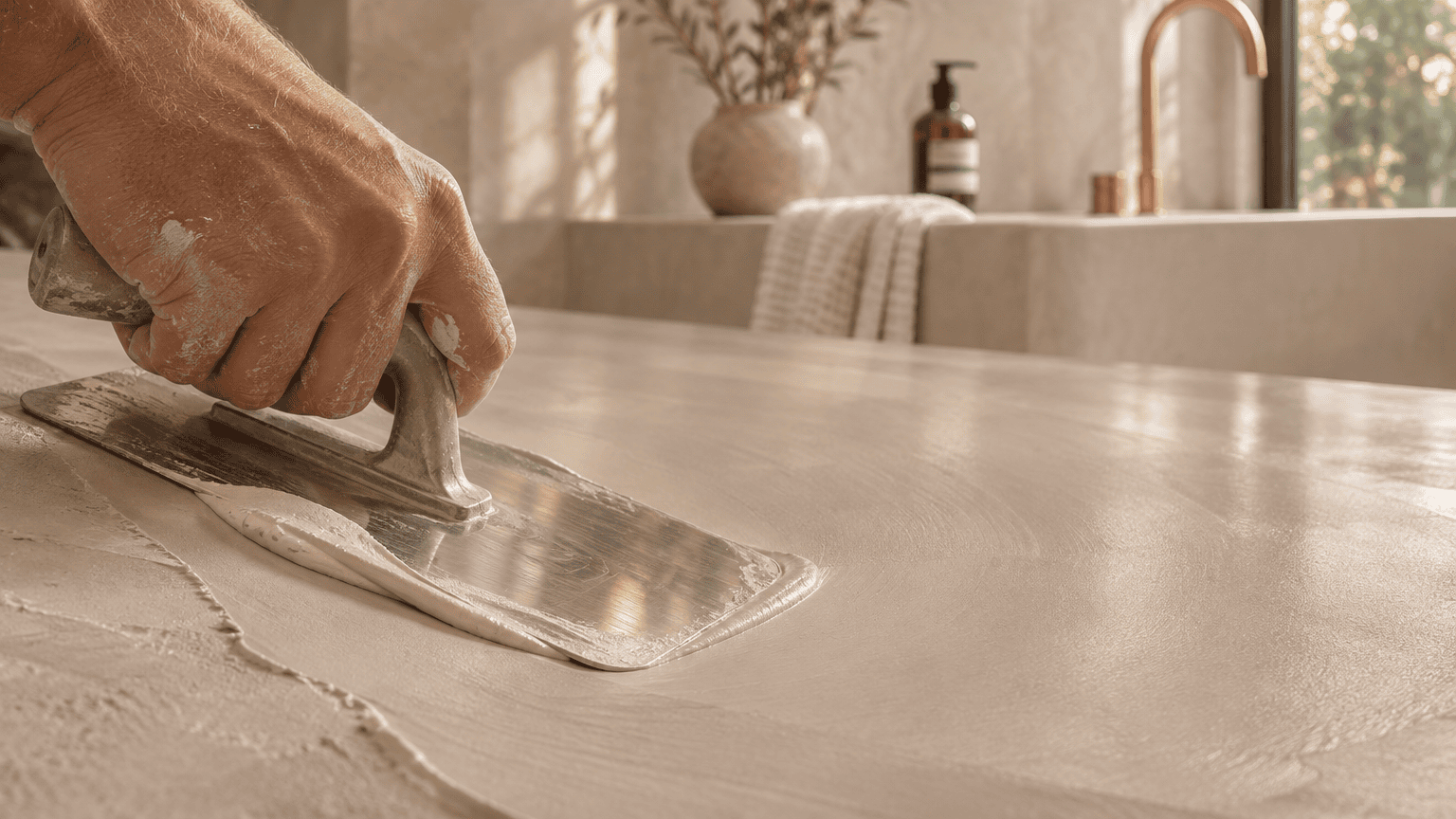
While microcement is celebrated for its stunning, ultra-thin, and seamless surface appearance, its true durability has nothing to do with the topcoat. The lifespan and structural integrity of any microcement application—whether on floors, walls, or shower surrounds—depend entirely on the condition of the substrate beneath it. If the base layer shifts, expands, or holds moisture, even the highest-grade polyurethane sealers and multi-layer polymer coatings will eventually fail. Proper evaluation and surface conditioning are non-negotiable first steps.
Step 1: Rigidity, Levelling, and Substrate Stability
Microcement is a rigid, high-performance decorative mortar, but it is not a structural slab leveling compound. Before application, existing subfloors or wall boards must be thoroughly tested for flex and deflection.
• Subfloor Deflection: Plywood or timber subfloors with excessive bounce must be structurally reinforced to prevent micro-fissures from telegraphing through the finish.
• Hollow Tile Testing: When applying over existing tile, every single tile is tapped to detect hollow spots. Loose or unbonded tiles must be injected with epoxy or removed and patched to ensure a solid mechanical bond.
Step 2: Waterproofing and Moisture Vapor Mitigation
Water intrusion is the number one enemy of seamless cementitious finishes. In high-moisture zones like bathrooms and showers, waterproofing cannot be treated as an afterthought.
• We apply continuous liquid waterproofing membranes and embed alkali-resistant fiberglass mesh across all critical joints, corners, and transition areas.
• Sub-surface moisture levels must test below manufacturer thresholds before any primer goes down; trapping residual moisture beneath a vapor-tight microcement layer will inevitably lead to blistering, delamination, or mold growth.
The Cost of Cutting Corners on Prep Work
Choosing a shortcut to save time on substrate preparation invariably compromises the finished project. Skipping degreasing, omitting primer coats, or ignoring hairline structural cracks might yield a temporary short-term look, but it invites premature cracking and water damage within months. Investing time in meticulous substrate profiling, grinding, patching, and priming guarantees that your microcement surfaces will maintain their flawless architectural aesthetic for decades.